
Latex-Free Xeroform Gauze for Sensitive Skin: What to Know
Release time:
2026-10-28
For clinicians, wound care nurses, and caregivers managing patients with reactive or fragile skin, the selection of a primary wound contact layer is rarely straightforward. Among the most consistently recommended options in professional wound care settings is the xeroform gauze dressing — a fine-mesh, petrolatum-impregnated product designed to maintain a moist healing environment while preventing the mechanical trauma that standard dry gauze notoriously causes. When the patient population also includes individuals with latex sensitivities or known allergies, the requirement for a latex-free formulation moves from a preference to a clinical necessity.
This article examines how latex-free xeroform gauze dressings function, which patient scenarios benefit most, and how manufacturers such as Roosin Medical have developed products that address the specific demands of sensitive skin management across both human and veterinary wound care.
Understanding the Xeroform Gauze Platform
Xeroform gauze is defined by two essential components: a woven fine-mesh cotton substrate and a petrolatum-based impregnation that includes 3% Bismuth Tribromophenate (BTP). Together, these elements perform three simultaneous functions — non-adherence, antimicrobial activity, and odor control — within a single primary dressing layer.
The petrolatum or paraffin coating creates a lubricating barrier between the wound surface and the gauze fibers. This is the characteristic that directly addresses the most common complaint in standard gauze usage: fiber adhesion to newly formed granulation tissue. When dry gauze adheres, dressing removal causes secondary mechanical trauma — a cycle of tissue tearing, renewed bleeding, and pain that delays re-epithelization. The petrolatum barrier interrupts this cycle entirely by ensuring that the gauze does not bond to the wound bed, regardless of exudate levels.
The Role of 3% Bismuth Tribromophenate
The 3% Bismuth Tribromophenate component functions as both an antiseptic and a bacteriostatic agent. Rather than delivering a high-intensity antimicrobial burst, BTP provides steady, sustained suppression of bacterial reproduction across the wound surface. This is particularly valuable in low-to-moderate exudate wounds — such as superficial partial-thickness burns, skin graft donor sites, and post-surgical incisions — where the risk of bacterial colonization is real but the wound does not yet require an advanced antimicrobial dressing.
Beyond bacterial control, BTP also acts as a deodorizing agent, neutralizing wound malodor that can otherwise cause significant distress to both patients and care providers. In settings such as dermatology, plastic surgery, and outpatient wound clinics, where patient comfort and compliance are key to positive outcomes, this deodorizing action contributes measurably to the overall care experience.
Petrolatum Coating and Atraumatic Removal for Sensitive Skin
For patients with sensitive skin — including elderly patients with fragile epidermal layers, post-surgical patients with compromised tissue integrity, and individuals prone to contact dermatitis — the non-adherent mechanism of xeroform gauze is not simply a comfort advantage. It is a clinical safety requirement. Repeated dressing-change trauma in sensitive skin populations can widen wound margins, introduce secondary infection, and meaningfully extend healing timelines.
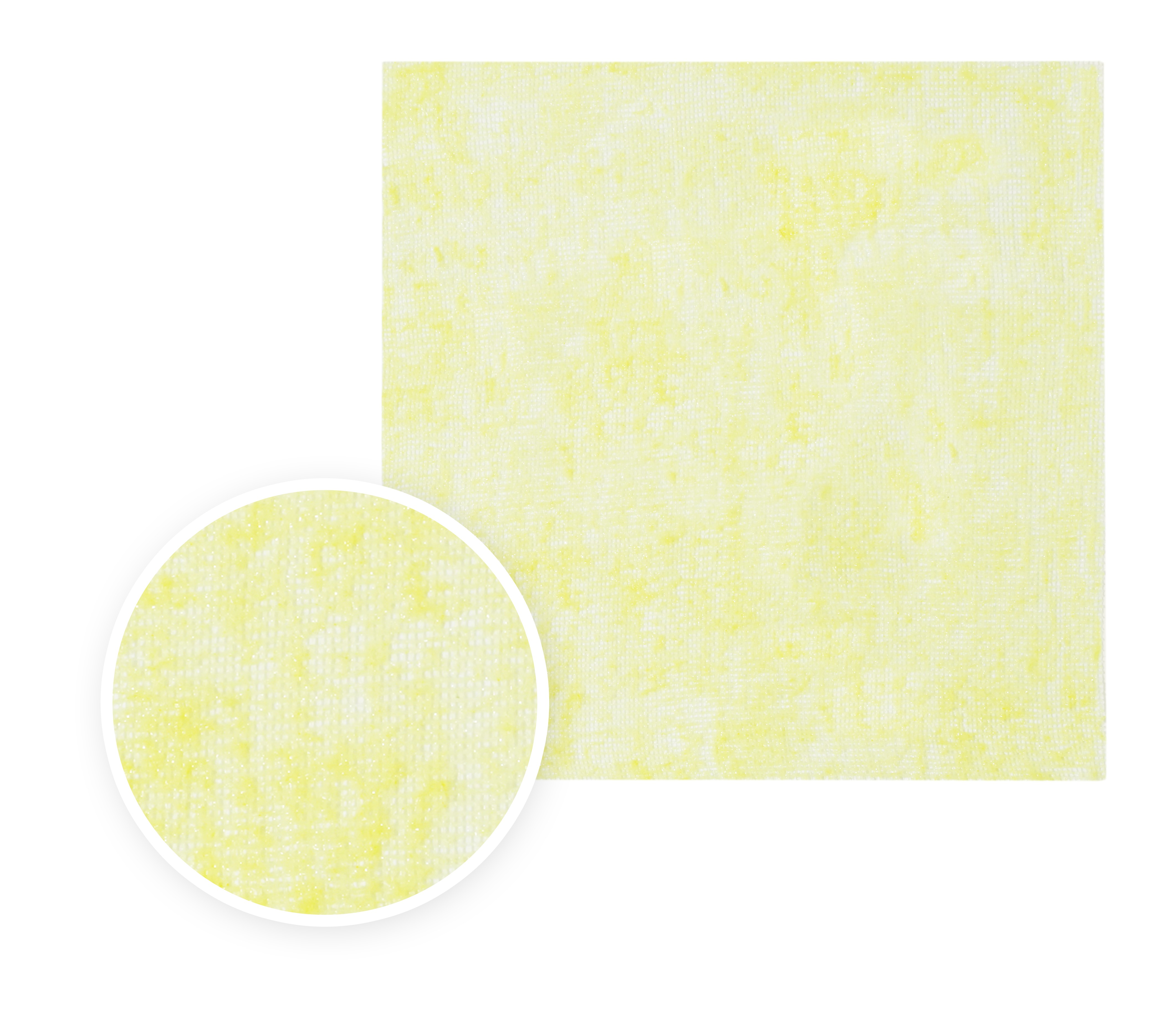
The petrolatum base in xeroform gauze physically prevents the gauze mesh from embedding into granulation tissue or adhering to surrounding perilesional skin. This enables painless, trauma-free dressing removal — a quality that reduces patient anxiety, improves compliance with scheduled dressing changes, and supports the integrity of healing tissue between care episodes.
Clinical Applications Across Care Settings
The versatility of latex-free xeroform gauze positions it across a broad range of care environments. Primary indications include:
- Superficial partial-thickness burns: The non-adherent, moist contact layer supports re-epithelization without disrupting newly formed epidermal cells during removal.
- Skin graft donor and recipient sites: In dermatology and plastic surgery, protecting fragile graft margins from mechanical disruption during dressing changes is essential to procedural success.
- Post-surgical incisions and minor lacerations: Xeroform gauze provides a clean, antimicrobial interface that supports structured healing without the need for frequent primary dressing changes.
- Packing strip applications: The slender packing strip format allows non-adherent packing of narrow wound tracts, including drain sites, bite punctures, and surgical cavity sites — maintaining open drainage without fiber contamination.
- Low-exudate chronic ulcer management: In venous leg ulcers or pressure injuries with minimal drainage, the moist balance provided by the petrolatum impregnation sustains the healing environment without maceration risk.
Roosin Medical's Latex-Free Xeroform Gauze Dressing
Roosin Medical Co., Ltd., a global medical device manufacturer founded in 1996 and exporting to 87 countries, produces a latex-free xeroform gauze dressing that aligns closely with the clinical requirements described above. The product — formally designated as the Xeroform Gauze Dressing (Petrolatum Gauze with 3% Bismuth Tribromophenate) — is manufactured as a sterile, single-use device under ISO 13485 quality management standards, with US FDA compliance across its range.
The dressing is supplied in both flat sheet formats and packing strip configurations, covering standard clinical sizes including 5×5 cm, 10×10 cm, 2.5×20 cm, and 12.5×22.5 cm, with customizable OEM/ODM specifications available for healthcare procurement and distribution partners. Its fine-mesh woven cotton gauze substrate is soft, conformable, and trimmable, allowing clinicians to adapt the dressing to irregular wound contours, anatomical curves, and joint surfaces without fraying into the wound bed.
A clinically relevant strength of Roosin Medical's manufacturing approach is its 10,000 m² production facility, which operates under ISO Class 7/8 certified cleanroom conditions with automated production processes — a standard of environmental control that directly supports the sterility assurance and consistency of every dressing unit.
Regulatory Standards and Allergy Safety
The latex-free designation carries specific weight in clinical settings where allergy screening is a standard pre-procedure requirement. Latex allergies range from mild contact dermatitis to severe systemic responses, and the presence of latex proteins in wound contact materials introduces an unacceptable risk profile for affected patients. Roosin Medical's xeroform gauze dressing eliminates this risk by design — its latex-free formulation is compatible with allergy-sensitive surgical and wound care protocols.
The product's regulatory portfolio — including ISO 13485:2016, EU MDR (TÜV Rheinland), EC Certificate 93/42/EEC, and US FDA Facility Registration — provides procurement teams and clinicians with documented assurance of manufacturing quality, sterility validation, and regulatory compliance across major global markets.
Selecting the Appropriate Format for Your Clinical Scenario
Clinicians evaluating xeroform gauze for their patient populations should consider format alongside wound characteristics:
- Flat sheet format: Best suited for open surface wounds, burn sites, graft donor areas, and post-surgical incisions where broad surface coverage is the primary requirement.
- Packing strip format: Designed for depth — effective in narrow wound tracts, abscess drain sites, and cavity wounds where maintaining drainage and obliterating dead space are the clinical priorities.
For facilities managing both acute and chronic wound populations, or those seeking private-label or custom-sized options, Roosin Medical's OEM/ODM manufacturing flexibility provides a practical procurement pathway aligned with institutional volume and specification requirements.
A Dependable Standard for Sensitive Skin Wound Care
As wound care practice continues to emphasize atraumatic dressing techniques and patient-centered outcomes, the demand for well-formulated, latex-free primary contact layers has grown steadily across hospital, outpatient, and home care settings. Latex-free xeroform gauze dressings — particularly those manufactured to verified international standards — offer a reliable, evidence-aligned solution for clinicians who need antimicrobial protection, moisture balance, and painless removal without introducing material-related sensitivity risks.
Roosin Medical's position in this space, built on three decades of technical expertise in functional dressing lines and biomaterials, reflects a consistent commitment to clinical-grade performance across global wound care markets.
More Events


Roosin Medical Co., Ltd.
No.8 Yuandong Road, Kouan Town, Gaogangn Taizhou City, Jiangsu Province, China
Leave us a message
* We will contact you within one working day. Please pay attention to your email.